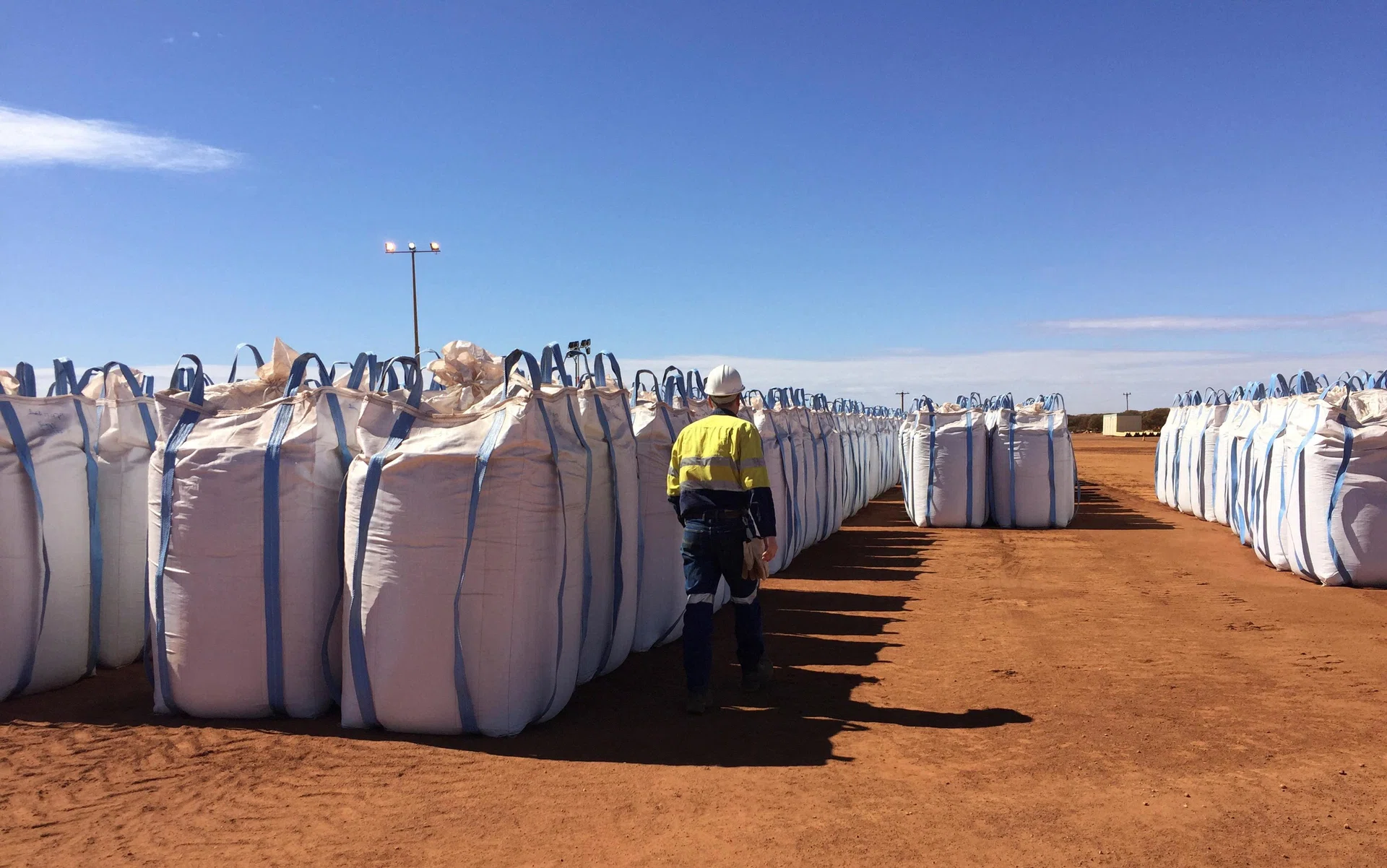
Sacks of rare earth concentrate. In a world where supply chains are vulnerable, these metals are more than a commodity story. They are a portfolio strategy for managing geopolitical risk. PHOTO: REUTERS
Can rare earth elements provide diversification and resilience in moments when traditional portfolios are vulnerable?
WHEN China restricted exports of gallium and germanium in 2023, markets were reminded that supply chains can be disrupted. These metals may not be household names, but they are critical to semiconductors, defence systems and renewable energy, which is why the restrictions drew immediate market attention.
This has prompted investors to turn once again to supply chain resilience as a portfolio concern. Rare earth elements sit in the same category as gallium and germanium. Embedded in electric vehicles, advanced weaponry and clean energy infrastructure, rare earth elements represent one of the few asset themes where geopolitics directly drives market outcomes.
That reality was underscored this July, when the United States backed MP Materials, its only active rare earth miner, with a multibillion-dollar package including equity, loans and a 10-year price floor on neodymium and praseodymium. The deal, discussed in detail in Winston Ma’s recent analysis of a potential US sovereign wealth fund, shows how policy is moving from rhetoric to concrete capital commitments.
For investors, the right question isn’t whether rare earths can “beat the market”. It’s whether they can provide diversification and resilience in moments when traditional portfolios are vulnerable.
A portfolio framing: Rare earths as a stress hedge
To evaluate this, I built a Maximum Sharpe Ratio portfolio using five ETFs – VanEck Rare Earth & Strategic Metals; Global X Lithium & Battery Technology; iShares US Aerospace & Defense; SPDR Gold Shares or SPDR Gold Trust; and iShares 7-10 Year Treasury Bond ETF.

The goal was not to design a market-beating strategy, but to evaluate whether rare earth exposures add portfolio resilience. I used monthly returns from January 2018 to July 2025, a 36-month rolling covariance matrix, and quarterly rebalancing. I compared the results of this portfolio against returns from broad equities (using S&P 500 as a proxy). The results were:
- Annualised Return: 11.45 per cent versus 14.53 per cent (S&P 500)
- Volatility: 21.95 per cent v 17.19 per cent (S&P 500)
- Sharpe Ratio: 0.43 v 0.73 (S&P 500)
If judged solely on the Sharpe ratio, which measures risk-adjusted return (a higher ratio is more desirable), the portfolio underperformed broad equities (S&P 500). But this misses the real point: rare earths tend to outperform during geopolitical shocks and supply chain disruptions, precisely when traditional portfolios are most at risk.
When rare earths shine
Recent episodes of stress and transition highlight how rare earths can function as a hedge when traditional portfolios stumble:
- 2019 US-China trade dispute: During the 2019 tariff stand-off, rare earth and defence ETFs advanced even as the S&P stumbled. This divergence highlighted their value as a hedge against policy-driven supply chain risks.
- 2020-2021 EV adoption rally: As electric vehicle demand accelerated, lithium and rare earth exposures surged ahead of the market. For investors, this underscores their potential to capture secular growth trends while adding diversification.
- 2023 export controls: When China restricted exports of gallium and germanium, rare earth themes drew renewed attention and outperformed. The episode showed how policy shocks can create “thematic alpha” precisely when traditional markets are vulnerable.
These bursts illustrate the real value: rare earths function as a shock absorber. They won’t replace equities, but they can provide a counterweight when macro risks flare.

Practical applications
For allocators considering this theme, here are three possible ways to frame an investment:
- Thematic diversification: Use rare earths as a satellite allocation that complements big secular themes: electrification, defence modernisation and the clean energy transition. These exposures can give portfolios targeted access to structural growth trends.
- Geopolitical risk premium: Recognise that policy shocks, not just market cycles, can drive returns. Export bans, tariffs and supply disruptions often move rare earth markets independently of equities, giving investors a rare source of true diversification.
- Portfolio construction: A practical approach is to test rare earths alongside other diversifiers, such as commodities, infrastructure or defence equities, in a satellite sleeve. As a starting point, consider a 5 to 10 per cent allocation within a diversified portfolio, paired with gold and Treasuries to balance risk. The goal isn’t to outperform equities, but to add resilience when equities are stressed.
Key takeaways
To summarise, investors should consider the following:
- Rare earths are not a silver bullet, but they are a geopolitical hedge that investors can no longer ignore.
- Traditional risk metrics like the Sharpe ratio understate their value, which lies in their non-correlation to broad markets during tail events.
- For allocators, the right framing is resilience, not return chasing.
In a world where supply chains are vulnerable, rare earths are more than a commodity story. They are a portfolio strategy for managing geopolitical risk.
The writer, a CFA, is an independent investment strategist specialising in asset allocation, factor investing and thematic portfolio construction. This is an adaptation of an article that first appeared on CFA Institute Enterprising Investor: https://blogs.cfainstitute.org/investor. It does not constitute investment advice and is intended solely for educational purposes.